


The Tax Mitigation Toolkit: Opportunity Zones 2.0

People who sell a business for eight figures are so rare that their friends and neighbors usually haven't done it either. When the biggest financial event of your life arrives, there may be no one at the dinner table who has been through it.
That makes it easy to miss the biggest cost of a sale until it's too late to change. The tax on the profit, called capital gains tax, is often that cost, and many ways to lower it have to be set up before closing or soon after.
Three of the tools we use
Tax-aware long-short investing (TALS) is designed to create tax losses that can cancel out gains. Your money stays available, and it has more time to work when it starts a year or more before a sale or the sale is early in the year.
A Delaware Statutory Trust (DST) lets a real estate seller trade into a share of a professionally managed property and put off the tax. That trade is called a 1031 exchange. A DST is supposed to be boring, a conservative holding designed to produce income.
A Qualified Opportunity Zone fund (QOZ) is for money you can leave invested for 10 years or more, and its rules get a big update on January 1, 2027.
How an Opportunity Zone works
When you sell something for a profit, you can put that profit into a Qualified Opportunity Fund, usually within 180 days, and put off the federal tax on it.1 The fund invests in areas the government has marked as economically distressed, often in real estate.1
A 1031 exchange only works for real estate. An Opportunity Zone fund can also take the profit from selling a business or stock.1, 2 And you invest only the profit. Say a building bought for $2 million sells for $4 million. To put off all the tax with a 1031 exchange, you generally reinvest the full $4 million, since any cash you keep is taxed.2 An Opportunity Zone fund only needs the $2 million of profit.1
What 2.0 changes
Under the original rules, all the tax people put off comes due on December 31, 2026, no matter when they invested.3 The One Big Beautiful Bill Act, which President Trump signed on July 4, 2025, made the program permanent and gave each new investment its own five-year clock.3
For money invested on or after January 1, 2027, the tax you put off comes due after five years, or sooner if you sell. When it does, 10% of that profit is never taxed, or 30% in a qualified rural fund. If you hold it 10 years or more, the growth can be free of federal tax when you sell. New zones start the same day.3
Since each investment has its own clock, a family knows which year the tax comes due, and we can plan losses, gifts or other income around it.
If you sold this year or already own a fund
If you sold something this year and your 180-day window runs into 2027, you can wait and invest under the new rules.3
If you own an investment under the original rules, the tax you put off is due on your 2026 return. It's based on the smaller of the profit you put off or what the investment is worth at the end of 2026, and it can't be rolled into a new fund.3 Get your own valuation and call your CPA before December 31.
Is it right for you?
Say someone sells a company in 2027 at a $5 million profit and invests it in a Qualified Opportunity Fund within 180 days. The tax is put off for five years. Then it's due on $4.5 million, or $3.5 million in a rural fund, and growth after 10 years can be free of federal tax.3 This is a hypothetical. It assumes every rule is followed and says nothing about how the investment will perform.
The right investor wants real estate in their portfolio anyway, can leave the money locked up for 10 years, and can pay the year-five tax from outside the fund. Before we run any tax math, I want to know if you'd own that project for 10 years with no tax break at all.
It doesn't fit everyone, and sometimes paying the tax is the best choice a family has. If you need the money within 10 years, TALS or another strategy may fit better. If your profit is from real estate and you'd rather have steady income than a lockup, a DST may fit better.
These strategies can also work together. An owner selling a company and its building might use a DST for the building, an Opportunity Zone fund for profit that can stay invested 10 years, and TALS to build losses against the rest. If a sale is in your next few years, bring us and your CPA in a year or more before you sign. The strategies that create losses need time, and the ones that put off taxes run on short deadlines after closing.
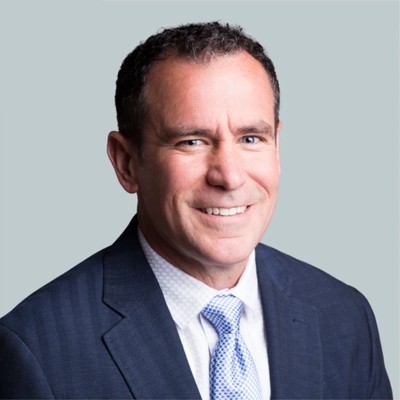
Author
Mike Johnson, MBA
Mike Johnson works with individuals and families navigating major financial events where taxes can have an outsized impact—from selling a business or appreciated real estate to taking a significant retirement distribution. He specializes in event-driven tax mitigation, identifying opportunities to reduce unnecessary taxes before, during, and after these financial transitions. With more than 30 years of experience, he replaces emotion with data and makes complex strategies easier to understand. The goal is simple: help clients make informed decisions, keep more of what they’ve built, and have a tax and investment strategy they understand and trust.
Sources
1. IRS. Opportunity Zones Frequently Asked Questions. Q1: a QOZ is "an economically distressed community where new investments, under certain conditions, may be eligible for preferential tax treatment." Q11: eligible gains include capital gains and qualified 1231 gains. Q13: you can elect to defer tax on only the part of the eligible gain that was invested. Q22: "Generally, you have 180 days to invest an eligible gain in a QOF." Accessed October 19, 2026.
2. IRS. Like-Kind Exchanges – Real Estate Tax Tips. Section 1031 applies only to exchanges of real property for exchanges after 2017; if you also receive other property or money, "you must recognize a gain to the extent of the other property and money received." Accessed October 14, 2026. The $4 million building is Pillar Capital's hypothetical: $4 million minus $2 million is $2 million of gain.
3. IRS. Notice 2026-40, Transitional Guidance on Qualified Opportunity Zones under §§ 1400Z-1 and 1400Z-2. June 2026. Section 1: amendments by § 70421 of Public Law 119-21 (July 4, 2025), the One, Big, Beautiful Bill Act; Treasury and the IRS intend to issue proposed regulations. Section 3: zones designated during 2026 begin their designation period January 1, 2027. Section 4.01: gain from an investment made on or before December 31, 2026, is included in income for the year that includes December 31, 2026, measured under § 1400Z-2(b)(2)(A) at the lesser of the gain deferred or the investment's fair market value, over basis (4.01(2)), and that deemed included gain cannot be deferred again. Section 4.02: for investments on or after January 1, 2027, deferred gain is included at the earliest of a sale, another inclusion event, or five years from the investment; basis increases 10 percent after five years (30 percent for a qualified rural opportunity fund); gain realized on, before or after December 31, 2026, may be deferred if timely invested on or after January 1, 2027. Section 5.02: for these investments held at least 10 years, basis equals fair market value at sale, no later than 30 years after the investment. Text checked October 19, 2026. The arithmetic in the $5 million example is Pillar Capital's: $5 million × 90% = $4.5 million; × 70% = $3.5 million.
Disclosures
All advisory services are offered through Savvy Advisors, Inc. (“Savvy Advisors”), an investment advisor registered with the Securities and Exchange Commission (“SEC”). Savvy Wealth Inc. (“Savvy Wealth”) is a technology company and the parent company of Savvy Advisors. Savvy Wealth and Savvy Advisors are often collectively referred to as “Savvy”.
Mike Johnson is an investment advisor representative registered with Savvy Advisors, Inc. (“Savvy”). All investment advisory services offered by Mike Johnson are offered through Savvy. Pillar Capital is an independent marketing brand name used by Mike Johnson for advertising and marketing purposes only. Pillar Capital and Savvy are not related or affiliated. For more information about Savvy, please visit our website.
Clayton Johnson is an investment advisor representative registered with Savvy Advisors, Inc. ("Savvy"). All investment advisory services offered by Clayton Johnson are offered through Savvy. Pillar Capital is an independent marketing brand name used for advertising and marketing purposes only. Pillar Capital and Savvy are not related or affiliated. For more information about Savvy, please visit our website.
Pillar Capital may describe its services as “fee-only” based on the fact that it receives compensation solely from asset-based advisory fees for its advisory services. However, investment advisory services are provided through Savvy Advisors, which receives additional forms of compensation from sources other than asset-based advisory fees. As a result, Savvy is considered “fee-based” under CFP Board® guidelines. Clients should understand that advisory services are provided by Savvy, and Savvy’s overall compensation structure includes revenue streams beyond asset-based fees. Additional information regarding fees, compensation, and potential conflicts of interest is available in Savvy’s Form ADV.
Certified Financial Planner Board of Standards Center for Financial Planning, Inc. owns and licenses the certification marks CFP®, CERTIFIED FINANCIAL PLANNER™, and CFP® (with plaque design) in the United States to Certified Financial Planner Board of Standards, Inc., which authorizes individuals who successfully complete the organization’s initial and ongoing certification requirements to use the certification marks.
Pillar Capital may use artificial intelligence (“AI”) and other technology tools in certain aspects of its business operations, including administrative processes, research, planning, compliance, risk monitoring, and client service. The use of AI is intended to support, and not replace, the professional judgment, oversight, and fiduciary responsibilities of the Adviser and its investment professionals.
Material prepared herein has been created for informational purposes only and should not be considered investment advice or a recommendation. Information was obtained from sources believed to be reliable but was not verified for accuracy. It is important to note that federal tax laws under the Internal Revenue Code (IRC) of the United States are subject to change, therefore it is the responsibility of taxpayers to verify their taxation obligations.
This communication is for informational and educational purposes only and should not be construed as specific investment, accounting, legal, or tax advice. All investments involve risk, including the potential loss of principal. Past performance does not guarantee future results. The information presented is based on sources believed to be reliable but cannot be guaranteed as to accuracy or completeness.
Index returns are shown for illustration only. Indices are unmanaged, do not reflect fees or expenses, and cannot be invested in directly. Diversification does not ensure a profit or protect against loss in a declining market.
Charts and data from third parties are used for illustration, and links to third-party websites are provided for reference. Savvy and Pillar Capital do not endorse and are not responsible for third-party content. Mention of any company is not a recommendation to buy or sell its securities.