

They Already Had My Social Security Number

“Anyone is susceptible to the ‘right’ scam in the right conditions.” Roger Grimes, KnowBe46
What happened to me
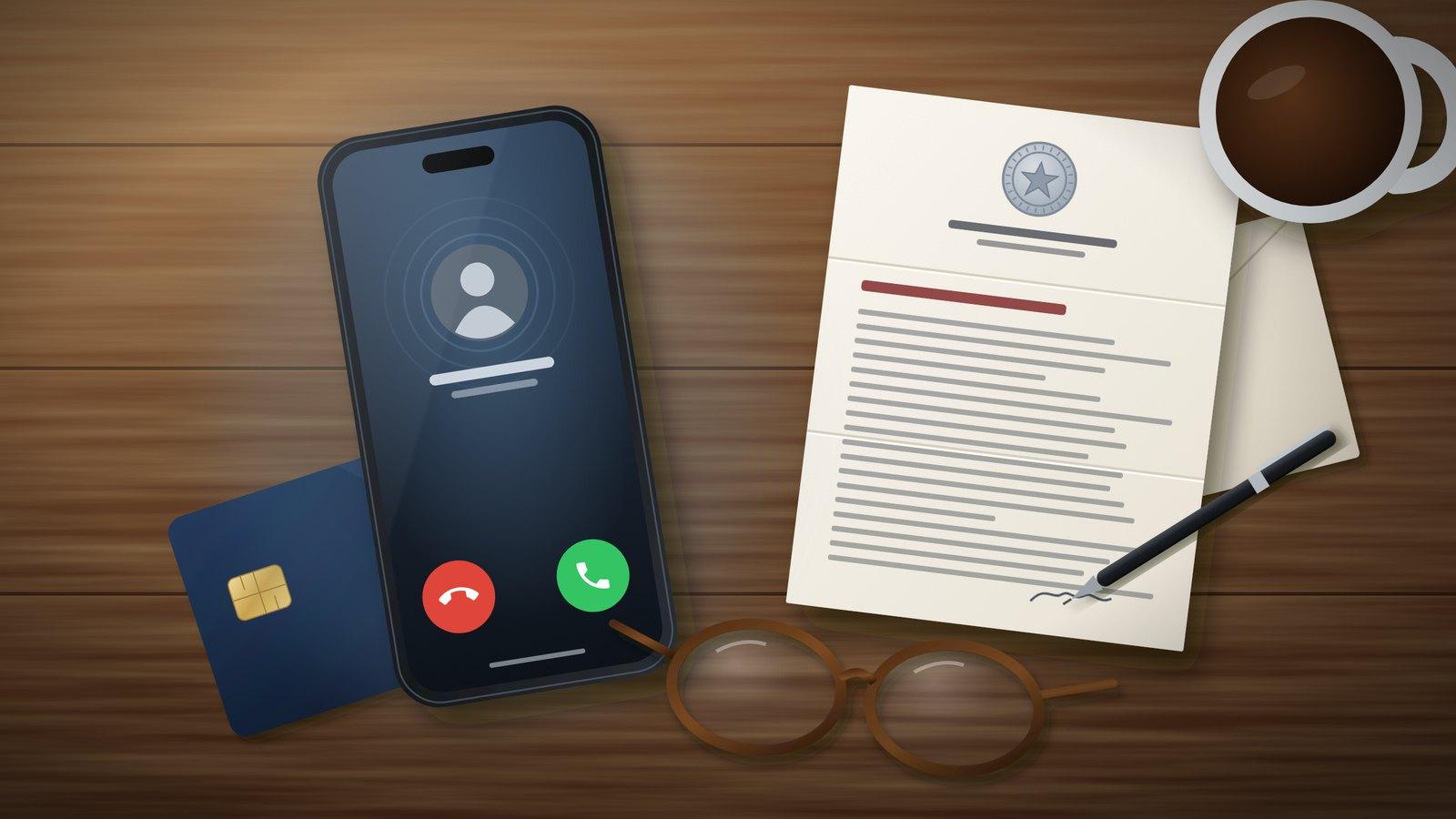
Last year I was the target of a sophisticated scam in which callers claimed I didn’t show up for jury duty and told me to send them money. Come to find out, it’s a fairly common scam right now, and many people have been bamboozled by these intelligent scammers.
In a Wall Street Journal article, Kimberly Fudge described an incident similar to mine. She lost $25,000, and the scammers could read her texts and see her internet searches. “They knew my Social Security number. They knew how much I had in my bank account,” she said. “They had every single thing about me.”14
Like Fudge, I let the scammers take me much further through their process than I like to admit, because they had a lot of personal information about me that made them sound legitimate. They even verified my identity by telling me my Social Security number.
I remember getting the call and thinking, “This sounds a little off, but I’m a bit scared of what happens if I don’t comply. They have my information, so they must be official, and they haven’t asked me to do anything irreversible yet.” They sounded official and used terms like “gag order” to discourage me from talking to anyone else. That should have been my first sign.
Fortunately, enough red flags went up that I finally ran a Google search on my phone and found out this was a common scam. After a quick visit to the sheriff’s office, where they told me right away that the call was a scam, I left the caller a few choice words (don’t tell my mom), hung up and reflected on how close I came to losing a big chunk of money.
And now, with AI, scams and cyber threats are getting smarter and reaching more people.
Why it’s getting worse
I was lulled into a false sense of security because I assumed my personal information was private. I thought if someone knew my Social Security number, they must be legitimate. Today we have to assume nothing is private: Social Security numbers, addresses, bank account numbers, even the answers to security questions. The 2017 Equifax breach alone exposed the personal information of 147 million people.3
Today a scammer can copy someone’s voice from a short clip posted online, write a polished email in your advisor’s or banker’s tone, and run thousands of these conversations at once. The FBI has warned that criminals now use AI to make fraud more believable and to reach more people.1 In 2025 the FBI's Internet Crime Complaint Center logged more than one million complaints and $20.9 billion in reported losses, up 26% from the year before. Americans 60 and older reported about $7.7 billion of that, more than any other age group.2
For families with a lot of wealth, the exposure is larger. You’re a more likely target because there is more to take, and there are more people a scammer can pretend to be: a parent, an adult child, a banker, a trustee, an advisor.
We have written about fraud before, most recently in Mike’s post Electronic Fraud in the World of AI. The threats are changing fast enough that it is worth a refresher.
Freeze your credit
What can someone do with your Social Security number? Quite a bit. A thief can open new credit cards and loans in your name, run up charges on the cards you already have, open phone and utility accounts, steal your tax refund and even get medical care as you.15 New accounts are the hardest to catch because the bills go somewhere else, and you may not know until an account you don’t recognize shows up on your credit report.
One of the most effective steps to keep someone from opening credit in your name is a credit freeze. A freeze locks your file at Equifax, Experian and TransUnion, so lenders cannot pull your report to open a new card or loan while it is on. It is free by federal law, it does not change your credit score, and your current cards and loans keep working. When you need new credit, such as a mortgage or a car loan, you sign in and lift it, and a lift requested online or by phone has to take effect within an hour.4
It sounds like a hassle, but I was able to do it online in less than 30 minutes. You need an account at each of the three bureaus, and you have to remember to lift the freeze before you apply for credit. But I think that small amount of work is worth it, and I would do the same for your children and grandchildren. A parent can freeze the credit of a child under 16 for free, and a child's number can be misused for years before anyone checks.4
If your Social Security number is already out there, three free government tools add more protection: an IRS Identity Protection PIN, so no one else can file a tax return in your name;8 a block on online access to your Social Security record, which you request at 800-772-1213 and which locks you out too until you lift it;9 and IdentityTheft.gov, the FTC’s site for reporting identity theft and getting a recovery plan.10
How to spot a scam
A freeze will not stop a caller who talks you into sending money, so two habits matter too. Hang up and call back at a number you look up yourself. Courts and federal marshals do not call to demand payment by gift card, wire or crypto.5 And pick a family code word, something only you would know, that anyone asking for money in a hurry has to say. The FBI recommends exactly that because of AI voice cloning.1
If you are the target of scams, you can detect most of them if they employ the following tactics:7
- Urgency. You must act right now, before you can think it through or call anyone.
- A trusted name. They say they are the court, the IRS, your bank or your advisor, and caller ID can be faked.
- A problem or a prize. Something is wrong with your account, or you have won something that costs a fee to collect.
- Secrecy. They keep you on the phone and tell you not to involve your family or your bank.
- An unusual way to pay. Gift cards, crypto, a wire, a payment app or cash handed to a courier.
- A code. They ask you to read back a code texted to your phone.
We put together a short guide that walks through freezing your credit at all three bureaus, step by step. If a call, an email or a request to move money ever feels off, call us before you act.
Download the guide: Freezing Your Credit
Who Controls Congress? Stocks May Not Care
Video: Dimensional Fund Advisors.

Author
Clayton Johnson, CPWA®, CFP®
Clayton Johnson is a Wealth Advisor at Savvy with more than 10 years of experience helping business owners, executives, and affluent families navigate complex financial decisions. His work brings together tax planning, investment strategy, estate and wealth transfer planning, executive compensation, and broader financial planning.
Sources
1. FBI Internet Crime Complaint Center, "Criminals Use Generative Artificial Intelligence to Facilitate Financial Fraud," public service announcement, December 3, 2024. https://www.ic3.gov/PSA/2024/PSA241203
2. FBI Internet Crime Complaint Center, 2025 Internet Crime Report, April 2026. https://www.ic3.gov/AnnualReport/Reports/2025_IC3Report.pdf
3. Federal Trade Commission, "Equifax Data Breach Settlement." https://www.ftc.gov/enforcement/refunds/equifax-data-breach-settlement
4. Federal Trade Commission, "What To Know About Credit Freezes and Fraud Alerts," and "Starting Today, New Federal Law Allows Consumers to Place Free Credit Freezes and Yearlong Fraud Alerts," September 21, 2018. https://consumer.ftc.gov/articles/what-know-about-credit-freezes-and-fraud-alerts and https://www.ftc.gov/news-events/press-releases/2018/09/starting-today-new-law-allows-consumers-place-free-credit-freezes
5. U.S. District Court for the District of Maryland, "Jury Scam" notice, and Federal Trade Commission consumer alert on jury duty scams. https://www.mdd.uscourts.gov/node/1286 and https://consumer.ftc.gov/node/333071
6. Roger A. Grimes, "Anyone Can Be Scammed and Phished, With Examples," KnowBe4 blog, February 21, 2024. https://blog.knowbe4.com/anyone-can-scammed-and-phished
7. Federal Trade Commission, “How To Avoid a Scam.” https://consumer.ftc.gov/articles/how-avoid-scam
8. Internal Revenue Service, “Get an Identity Protection PIN (IP PIN).” https://www.irs.gov/identity-theft-fraud-scams/get-an-identity-protection-pin
9. Jim Miller, “How to protect your Social Security number,” Savvy Living column, The American Legion, September 18, 2026. https://www.legion.org/information-center/news/planned-giving/2026/september/how-to-protect-your-social-security-number
10. Federal Trade Commission, IdentityTheft.gov. https://www.identitytheft.gov/
14. Kimberly Fudge, quoted in “The Jury Duty Scam That Cost This Family $25,000,” The Wall Street Journal, 2026. https://www.wsj.com/us-news/the-jury-duty-scam-that-cost-this-family-25-000-5629f703
15. Federal Trade Commission, “What To Know About Identity Theft,” September 2024. https://consumer.ftc.gov/articles/what-know-about-identity-theft
Disclosures
Clayton Johnson is an investment advisor representative registered with Savvy Advisors, Inc. ("Savvy"). All investment advisory services offered by Clayton Johnson are offered through Savvy. Pillar Capital is an independent marketing brand name used by Clayton Johnson for advertising and marketing purposes only. Pillar Capital and Savvy are not related or affiliated. Information presented here is for informational purposes only and does not intend to make an offer or solicitation for the sale or purchase of any product or security. Be sure to first consult with a qualified financial adviser and/or tax professional before implementing any strategy discussed here. The illustration was created with AI.
Charts and data from third parties are used for illustration, and links to third-party websites are provided for reference. Savvy and Pillar Capital do not endorse and are not responsible for third-party content. Mention of any company is not a recommendation to buy or sell its securities. Indices are unmanaged and not available for direct investment, and their returns do not reflect fees or expenses. Past performance does not guarantee future results.
Certified Financial Planner Board of Standards Center for Financial Planning, Inc. owns and licenses the certification marks CFP®, CERTIFIED FINANCIAL PLANNER™, and CFP® (with plaque design) in the United States to Certified Financial Planner Board of Standards, Inc., which authorizes individuals who successfully complete the organization’s initial and ongoing certification requirements to use the certification marks.